
Excavator Hydraulic Cylinder Seal Kits: Boom, Arm and Bucket Compared
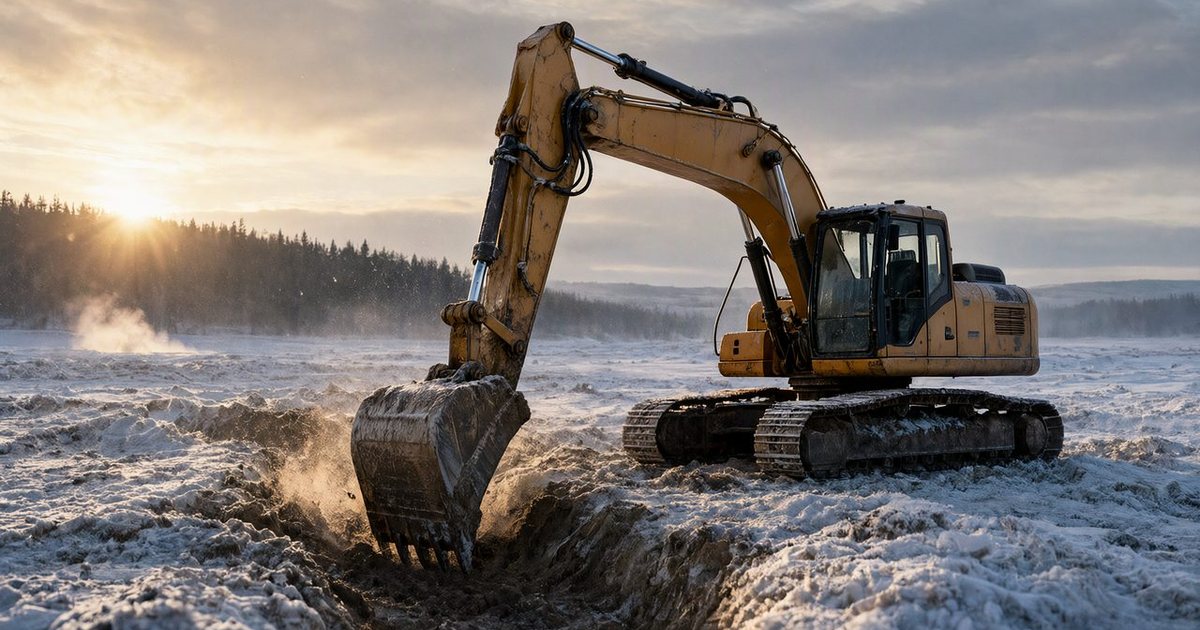
A standard excavator carries three working cylinders on the front attachment: boom, arm (often called the stick), and bucket. From the outside they look like variations of the same component, and buyers regularly assume a seal kit for one will fit another as long as the machine model matches.
It will not. The three cylinders differ in stroke, rod diameter, end-cap construction and groove width, and they are exposed to three different kinds of wear. This page explains what each cylinder does, how that changes the way its seals fail, and what to tell a supplier so the kit you receive is the right one.
Where each cylinder sits on the machine
- Boom cylinder — one end on the revolving frame or undercarriage, the other partway up the boom. It is the longest of the three and is usually mounted as a pair, one on each side of the boom.
- Arm (stick) cylinder — one end on the boom, the other on the arm. Medium stroke, mounted centrally, and by far the most frequently cycled of the three.
- Bucket cylinder — one end on the arm, the other on the linkage or the bucket itself. Shortest stroke, mounted lowest and furthest out toward the work face.
That difference in mounting position is the whole story. Everything below follows from it.
What each cylinder does to its seals
Boom cylinder: load and bending
The boom cylinder carries the weight of the entire front attachment plus whatever is in the bucket, and it does so at the longest lever arm. That produces two conditions the other two cylinders do not see as strongly:
- Side load. The rod is pushed not only along its axis but also sideways, so the piston and rod seals contact the bore and the gland unevenly.
- Deflection. Under heavy load the rod can flex slightly, which changes the contact pattern between the lip and the counter-surface.
The damage pattern that follows is usually one-sided wear and, where the seal is pushed into a gap it cannot hold, extrusion at the edge. If you have ever pulled a boom cylinder apart and found one side of the lip worn through while the opposite side looked almost new, this is why.
Arm cylinder: cycles
The arm does most of the digging motion, so its cylinder cycles far more often than the other two over the same working hours. Load per cycle is lower than the boom's, but the number of strokes is much higher.
The typical result is wear rather than damage: the lip goes flat and polished, the sealing edge rounds over, and the seal starts weeping before it ever tears. An arm cylinder seal often looks "fine" to the eye while no longer sealing, because nothing is broken — it is simply worn out.
Bucket cylinder: contamination
The bucket cylinder sits closest to the ground and closest to the material being moved. It is the one most exposed to dust, mud, slurry and wash-down water.
Here the wiper fails first, not the rod seal. Once the wiper stops scraping, abrasive particles ride on the rod into the gland, and the rod seal is cut from the outside in. A bucket cylinder that leaks usually has a destroyed wiper and a scored rod, and replacing only the rod seal will not hold.
Why the kits are not interchangeable
Even on the same machine, and even when two cylinders share a nominal bore, the kits differ because the parts inside are sized to that specific cylinder:
| What differs | Why it matters for the kit |
|---|---|
| Stroke | Longer stroke means a longer rod and different rod-seal geometry |
| Rod diameter | The wiper and rod seal are sized to the rod, not to the bore |
| End-cap / gland design | Determines groove width and whether a buffer or back-up ring is used |
| Piston design | Single-piece or two-piece piston changes the piston seal and wear ring arrangement |
| Duty of that cylinder | A kit built for high cycle count and one built for high side load are not the same stack |
This is why a kit is matched to machine model plus cylinder position, and never to machine model alone.
Real examples from our catalogue
Three listings that show the pattern — each one is tied to a specific model and a specific cylinder:
p326— PC200-7 hydraulic boom cylinder seal kit, PU and NBR, listed for Komatsu PC210-7 and PC220-7 boom cylinder repairp686— NBR and PTFE boom cylinder seal kit for Hitachi EX200-1p1046— SK200-5 bucket cylinder repair seal kit for Kobelco SK200-5
Notice that all three name the cylinder. That naming is not decoration; without it the listing would be ambiguous.
A note on the numbers behind this article. In our current catalogue of 996 hydraulic kit and repair-part listings, the word "boom" appears in 38 titles, "arm" in 21, "bucket" in 59 and "stick" in 9. Those are title word counts, not a count of distinct kits in stock — one listing can mention several terms, and many listings name only the model. We are giving the word counts so you can see the shape of the data, not as an inventory figure.
Common ordering mistakes
- Model only, no position. "Seal kit for PC200" is not an order. The same machine has three front cylinders and often more elsewhere.
- Three cylinders, one position stated. If you are resealing the whole front end, say so and list all three positions. A supplier who assumes will send three of the same.
- Old-part dimensions instead of model and position. Dimensions help, but they do not tell a supplier which cylinder the kit belongs to, and a measured seal can be a worn version of the original.
- Assuming a kit covers the whole machine. A boom cylinder kit covers the boom cylinder.
What to send with an enquiry
- Machine make and model
- Which cylinder — boom, arm or bucket
- How many of each
- Part number if you have one (not required, but it shortens the check)
- A photo of the old seal or the rod, if the cylinder is already apart
If you only know the model and the position, that is usually enough to start. Our seal kit lookup by machine model is built for exactly that case.