
Common Hydraulic Seal Failure Causes and What the Damage Tells You
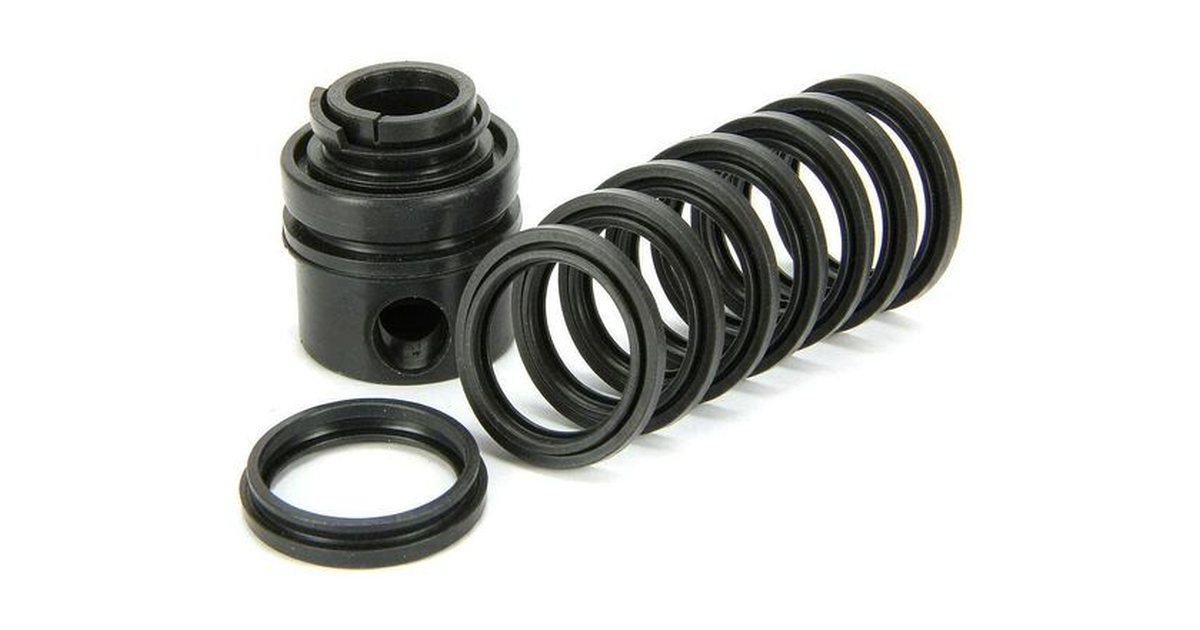
A hydraulic cylinder that has started to leak is telling you something. The oil on the rod is the symptom. The condition of the seal when you take it out is the evidence.
Most seal replacement goes wrong for the same reason: the failed part is swapped for a new one, and the reason it failed is left in the machine. Three months later the new seal is gone too, and now it looks like a quality problem.
This page is about reading the damage before you order the replacement.
Start with the damage, not the part number
The temptation is to measure the old seal, find a matching part, and move on. That answers what to buy. It does not answer why it failed, and those are two different questions.
Six damage patterns cover most of what you will find inside a hydraulic cylinder. Each one points at a different root cause, and three of the six cannot be fixed by buying a better seal.
Pattern 1: The lip is worn flat and polished
The sealing lip has lost its sharp edge. The surface looks smooth, sometimes almost glossy. There is no tearing, no chunks missing.
This is normal wear, or wear accelerated by poor lubrication. The seal did its job for as long as it could. If the machine has run a long time since the last reseal, this is the expected outcome.
What to check beyond the seal: if the same cylinder wears out seals noticeably faster than its neighbours, look at the rod surface. A rod with fine scoring acts like a file on every stroke.
Pattern 2: The lip is cut, torn, or has a chunk missing
A clean cut or a torn lip usually means the seal was damaged during installation, or the rod picked up something hard and dragged it through the seal.
Installation damage typically shows as a cut at one point, often where the seal passed over a thread, a shoulder, or a sharp edge. Foreign object damage typically shows as a tear or gouge, and there is often a matching mark on the rod.
These two look similar but have completely different fixes: one is a technique problem, the other is a contamination problem.
Pattern 3: The seal is nibbled at the edges (extrusion)
The edges look chewed, flattened, or pushed into a shape that no longer matches the groove. In severe cases the material has visibly flowed into the gap.
This is extrusion. Under pressure, the seal material gets forced into the clearance between the piston and the bore, or between the rod and the gland. Once it flows into that gap, it gets cut off on the return stroke.
The seal is usually the victim here, not the cause. Extrusion happens because the clearance is too large for the pressure, or because the backup ring that should be protecting the seal is missing or was never fitted.
If you replace the seal without addressing the backup ring, the new seal will extrude too. This is one of the most common repeat failures in hydraulic repair.
See Backup Ring and Wear Ring for how these two parts are supposed to sit relative to the seal.
Pattern 4: The seal is hard, cracked, or has lost its elasticity
The material has gone brittle. It may crack when you bend it, or crumble at the edges. It no longer springs back.
Hardening points at the material being wrong for the duty — the fluid, the temperature, or both. It can also happen to a seal that has sat in a machine unused for a long time.
This is the one pattern where the seal itself is the problem, and where simply buying the same part again will produce the same result.
Which material suits which duty is a question for your supplier, not for a web page. We list the materials we stock — NBR, FKM, PU, PTFE, PA, EPDM and silicone appear across our seal range — but the selection depends on what the cylinder actually sees.
See NBR vs FKM for how to frame that question.
Pattern 5: One side is worn, the other is not
The seal is worn unevenly — one side flattened, the other still showing its original profile. Sometimes there is a visible high spot.
Uneven wear means the rod or piston is not travelling straight through the seal. The usual causes are a worn guide ring, a bent rod, or a damaged bore. The seal is being pinched on one side on every stroke.
Replacing the seal alone will not fix this. The new seal will wear the same way, usually faster because it starts with less material to lose.
Pattern 6: The wiper is destroyed and the rod seal looks contaminated
The outermost seal — the wiper, sometimes called a dust seal — is torn, missing chunks, or completely gone. Behind it, the rod seal shows signs of grit embedded in the lip, or scoring that matches particles.
This is the external contamination path. Once the wiper fails, dirt, sand and water go straight to the rod seal on every stroke.
The wiper is usually the cheapest part in the cylinder and the first one to fail, because it works in the dirtiest position with the least lubrication. A failed wiper does not just let dirt in — the trapped particles then score the rod, and a scored rod destroys every seal you put in afterwards.
See Wiper Seal: Why It Fails Before the Rod Seal.
What the damage pattern tells you to check
| What you see | What it usually means | What else to check before reassembly |
|---|---|---|
| Lip worn flat, polished | Normal wear or poor lubrication | Rod surface condition |
| Cut or torn lip | Installation damage or foreign object | Rod for matching marks; installation method |
| Edges chewed, material flowed | Extrusion | Backup ring present? Clearance condition |
| Hard, cracked, brittle | Material mismatch | Fluid type and operating temperature — ask supplier |
| Uneven wear, one side | Misalignment | Guide ring, rod straightness, bore |
| Wiper destroyed, grit in rod seal | External contamination | Rod scoring; consider a protected rod |
Before you order the replacement
Three things worth doing while the cylinder is still open:
- Photograph the failed seal before you clean it. The damage pattern is the diagnosis, and it disappears the moment you wipe it.
- Check whether the backup ring and guide ring are present. If the old kit had them and the new one does not, you will be back here.
- Look at the rod. Scoring, pitting or a chrome defect will kill the new seal regardless of its quality.
If you are not sure which pattern you are looking at, send a photo of the damaged seal along with the machine model and the cylinder position. We can usually tell you which of the six it is, and what to check before the new kit goes in.